Real-time marketing: the World Cup lesson
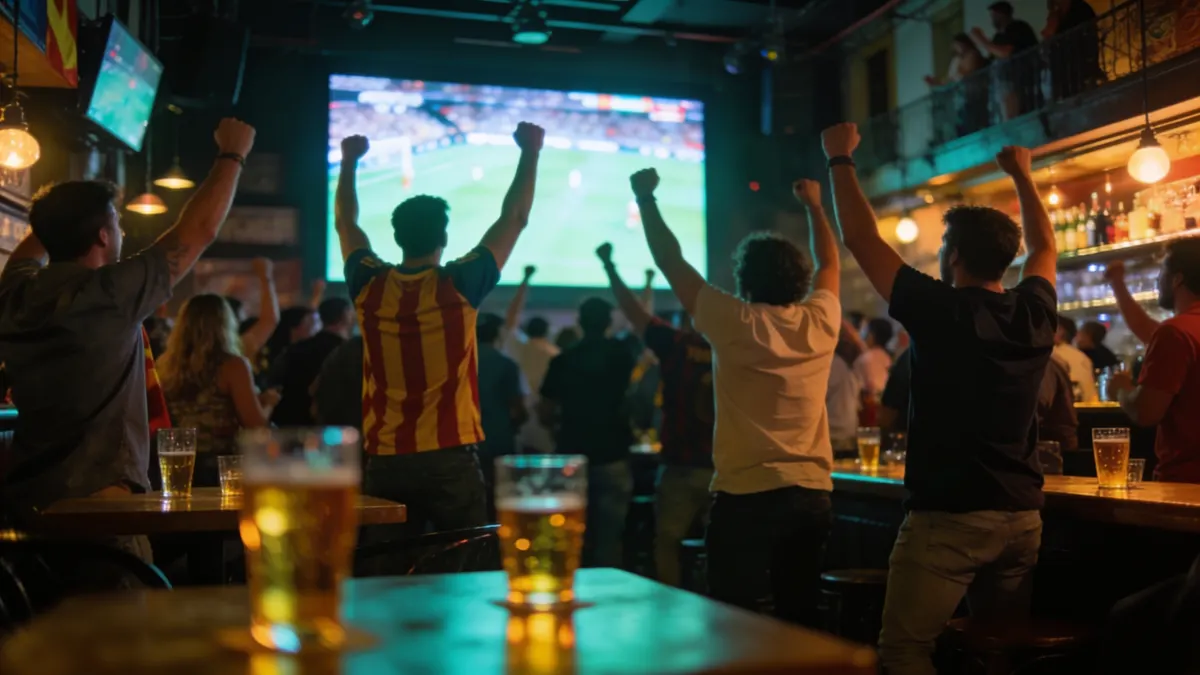
The World Cup is no longer just played and broadcast: it is now advertised with AI. adidas uses it inside a mega-production, LEGO stitched four superstars into one frame who never met on set, Movistar built almost its entire national-team spot with it, and anonymous creators are flooding social media with fake ads that look official. Four different tiers, one conclusion: these techniques can be assessed for a campaign where rights, context, scope and approvals allow.
A window that closes in hours
An impossible comeback, a stoppage-time penalty, a goal replayed at every lunch table. The cultural moments of a tournament like this are the cheapest and most expensive raw material in marketing at once: free because the attention is already there, exorbitant because it expires within hours. Responding early can be valuable, but no format guarantees attention or a specific turnaround. A shoot, AI or a hybrid needs a schedule compatible with the brief, rights, assets, reviews and approvals. This World Cup is proving it on four tiers.
Case 1 · adidas "Backyard Legends": the mega-production that uses AI where it pays off
Premiered on 7 May, five minutes directed by Mark Molloy and produced by Smuggler: Timothée Chalamet, Messi, Bad Bunny, Lamine Yamal, Bellingham and Trinity Rodman, plus nineties icons Zidane, Beckham and Del Piero. The British press reported a shoot in the region of 50 million pounds, and within four days the campaign passed 56 million views on Instagram alone. The detail that matters here: among all that live-action and cutting-edge VFX, the piece turns to AI where it pays off, including a recreated nineties Beckham, as the Why Is This Interesting newsletter pointed out.
The "Backyard Legends" spot (adidas, 2026), directed by Mark Molloy. Video from the LB Originals channel on YouTube.
The takeaway: the tournament's biggest-budget brand did not choose between shooting and AI. It used each technique where it performs. That is exactly the criterion we apply to every commission, with or without 50 million.
Case 2 · LEGO "Everyone Wants a Piece": the four were never in the same room
In April, LEGO sat Messi, Cristiano Ronaldo, Mbappé and Vinicius around a brick-built World Cup trophy. The campaign, created by Our LEGO Agency, passed 314 million Instagram views across the players' accounts, with a reported investment of around 8 million dollars.
The "Everyone Wants a Piece" spot (LEGO, 2026). Video from the Brand-News channel on YouTube.
The interesting part came afterwards: a supposed behind-the-scenes clip went viral, attributed to the circle of one of the doubles and never confirmed by the brand, showing what the press had already suggested: the four never met on set. Body doubles for blocking and action, separate shoots, and digital face replacement to stitch them into the same frame.
The behind-the-scenes clip that went viral, showing the players' doubles. Seven Masters channel on YouTube.
Messi shared it with the hashtag "HonestlyItsNotAI", and that is the lesson: the question "is this AI?" is now part of the conversation around any big campaign, to the point that brands answer it with hashtags. The specific technique (doubles and compositing, generation, or a mix) matters less than having the answer ready. And from 2 August it will be mandatory to answer it on the piece itself whenever synthetic content looks real.
Case 3 · Movistar's "Batido": Spain's team spot, almost all AI, in prime time
On 25 May, timed with the squad announcement, Movistar premiered "Batido", the campaign for its sponsorship of the Spanish national team: an epic piece of around two minutes created by Oriol Villar under the "Es por todos" platform, produced by Roma and Mito AI with a team of more than 140 specialists, and rolled out across TV, cinema, out-of-home, press and digital. According to trade press coverage, roughly 95% of the piece was AI-generated. And the real players are still in it, Cucurella, Lamine Yamal, Borja Iglesias, Marcos Llorente and Oyarzabal among them, with a final twist: it was all created by a group of teenagers at coach Luis de la Fuente's request.
The "Batido" spot (Movistar, 2026), created by Oriol Villar and produced by Roma and Mito AI. Video published on YouTube by Dircomfidencial.
Three quick takeaways. One: one of the country's biggest brands trusted its most visible piece of the year to an AI production pipeline and aired it in prime time; this is no longer an experiment. Two: 140 specialists is not "pressing a button"; AI reorganises the team rather than deleting it, and direction stays human. Three: part of the audience met the spot with suspicion precisely because it was AI; transparency and craft are what separate epic from backlash.
Case 4 · The fan versions many took for real
The third tier carries no brand's signature. On 1 March, creator VEPEFILMS published an AI-generated remake of adidas's pre-2006 World Cup ad, one of the most remembered pieces in sports advertising: his version puts Mbappé, Cristiano Ronaldo, Vinicius, Dembélé, Lautaro, Kimmich, Kubo, Pulisic and Lamine Yamal in the same frame, and brings back Pelé and Maradona. And more pieces of the same kind are circulating, like this apocryphal "ad" that gathers Neymar, Messi, Cristiano, Pelé, Maradona and Ronaldinho with mega-production looks, with neither adidas nor the players involved at all.
Fan-made AI piece imitating a brand ad; neither adidas nor the players took part. AI Craft channel on YouTube.
Players from different eras who never stood on a set together, in pieces that spread until many took them for the real thing. The point is not nostalgia: a single creator, with no stadium, no extras and no shoot insurance, now reaches a visual level that three years ago demanded a mega-production. The warning matters just as much: that is a fan exercise, not a campaign. Without image rights from every player and a brand commission, a piece like that cannot air. The difference between a viral clip and a campaign is the contract.
What this means if you run a brand
Four tiers, one conclusion: The useful question is which technique fits and under what control. Selected scenes can be built without physically assembling cast, stadium or crowd, but feasibility, rights, finish and cost are assessed for each brief.
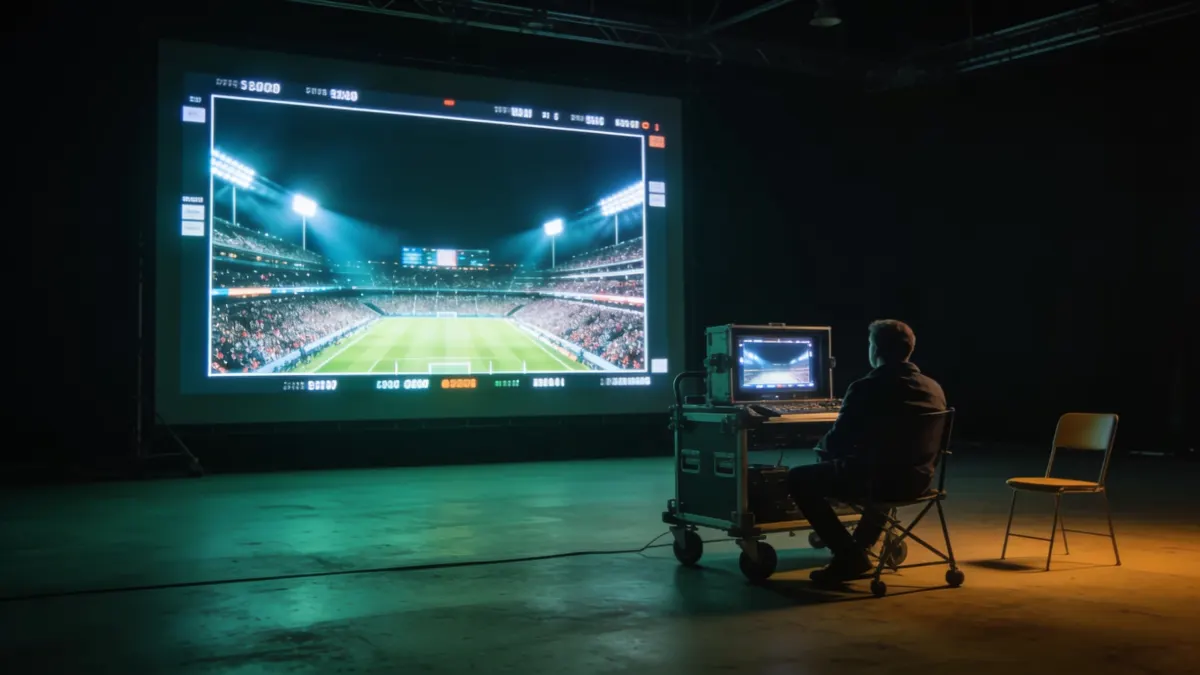
For this article we produced an editorial demonstration: an entire bar frozen mid-goal while the camera glides through it. It is not a commission or a universal turnaround benchmark. Techniques such as digital doubles, generated crowds or hybrid scenes are assessed only with the relevant brief, rights, consent, formats and approvals.
Demo piece produced by EficiencIAl Studio for this article: fully generated scene, camera move included. AI-generated and labelled as such.
What separates a serious campaign from a fan viral comes down to three things, and all three are a production company’s daily work: rights (faces and voices under contract, or original creative that needs none), human direction shot by shot (Batido’s 140 specialists are no accident) and compliance: Article 50 of the AI Act sets transparency duties for certain content and actors, including covered deepfake cases; applicability must be assessed for the role, context and piece. We published how to label it, channel by channel. Our service covers assessment, technical preparation and traceability to the agreed scope; it does not guarantee legal compliance, and legal questions are coordinated with client counsel.
The fine print of newsjacking
The tournament's official name, logos, trophy and player images are registered or managed by their owners: adidas and Movistar can feature their stars because they pay for rights and sponsorships; the fan pieces could never air as advertising. Newsjacking done properly is built on your own creative, fan atmospheres and the insight of the moment. No broadcast screenshots, no third-party material with the watermark cropped out: the images and the video in this article were generated by us, and are declared as AI.
The next moment will not announce itself
The tournament ends on 19 July, but the cultural calendar does not stop. The ability to respond to a real-time moment is prepared beforehand through the brief, rights, approval routes and brand assets. In our AI video production, scope, schedule, revisions, rights and deliverables are set after the project is reviewed. To assess a piece for your brand, talk to us.
Sources
- adidas: official "Backyard Legends" announcement
- FourFourTwo: adidas's 50-million-pound World Cup commercial and its full cast
- Why Is This Interesting: the AI-recreated Beckham in the adidas spot
- Ad Age: LEGO unveils its World Cup campaign with Messi, Ronaldo, Vini Jr. and Mbappé
- Euronews: Ronaldo and Messi reunite in LEGO's viral campaign
- Exchange4media: the viral behind-the-scenes and the LEGO spot's body doubles
- MarketingNews: Movistar backs AI to tell La Roja's story
- Dircomfidencial: Movistar premieres "Batido"
- Paréntesis.Media: Spanish advertising enters the AI era
- OneFootball: the AI-made remake of the 2006 ad