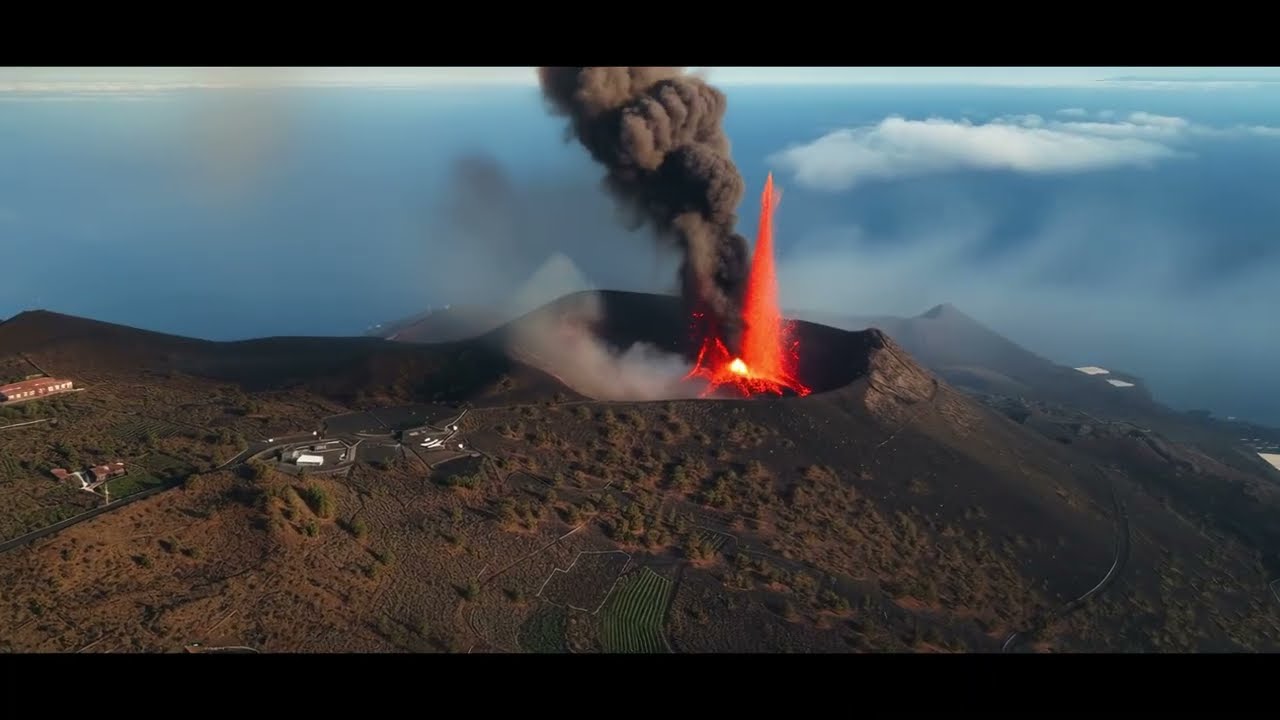
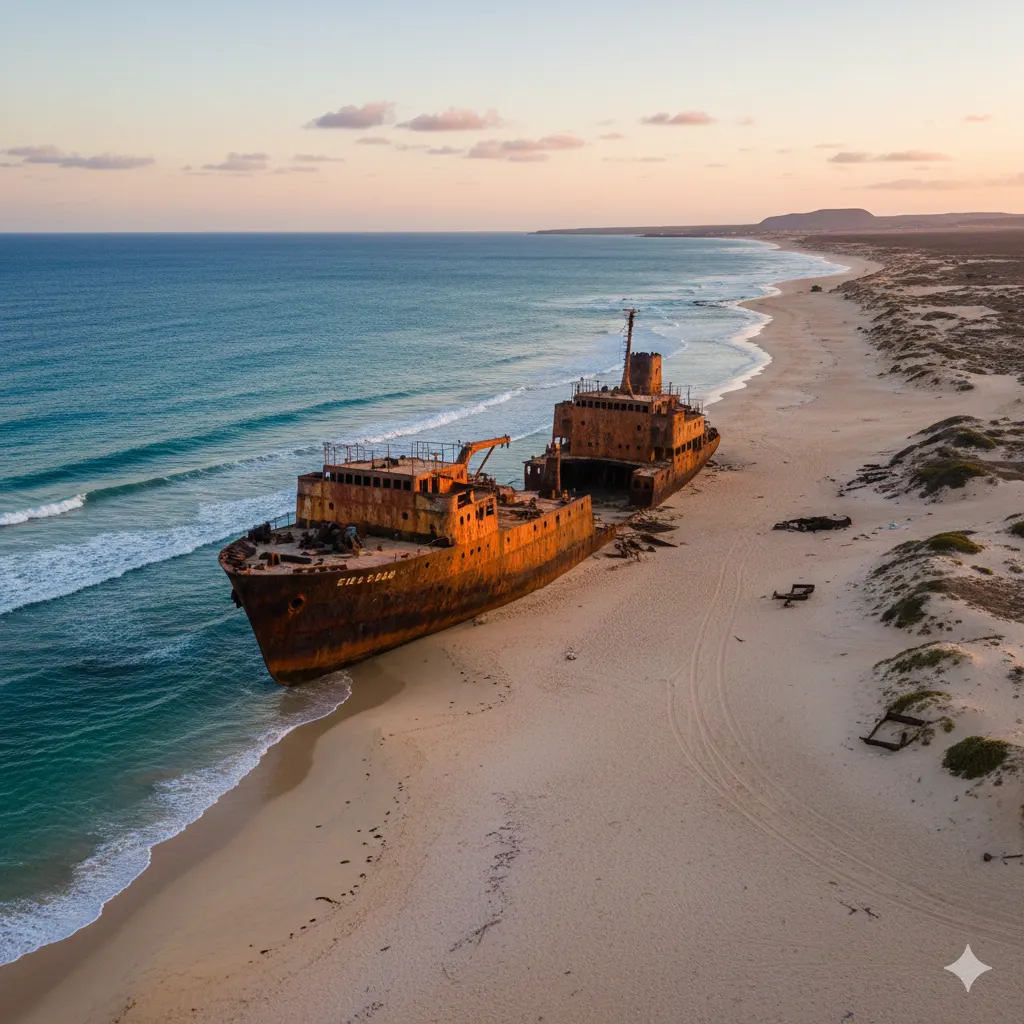
Set extension and matte painting
The set ran out two metres past the frame. We extend the environment, replace the background or build the city that does not exist behind the actors.
Visual effects · VFX with artificial intelligence
An AI visual-effects studio for film, advertising, and brands. We break down each shot, choose what belongs in generation or manual compositing, and agree tests, schedule, resolution, and deliverables before production.
AI visual effects are shots where whatever could not be filmed (an environment, a creature, another period, different weather) is generated with AI models and then integrated into the real footage through tracking, keying and colour matching. The result is validated against the agreed criteria and deliverables. Any schedule or cost impact depends on the shot, source footage and approved pipeline.
Forty-eight seconds of our own work, with no filler shots. It is a montage of comparisons: each scene comes in as the take left the camera and transforms in front of you, layer by layer, up to the final result.
You will see snow over Madrid in August, an attack helicopter where there was a fire engine, a dinosaur where there was a dog, and a branded product that entered the shot once the shoot was already over.
Different jobs, different source material, all solved the same way. What does not change from one shot to the next is the judgement: the light has to match, the camera grain has to be there and the movement has to follow. That is where an effect either holds up or gives itself away.
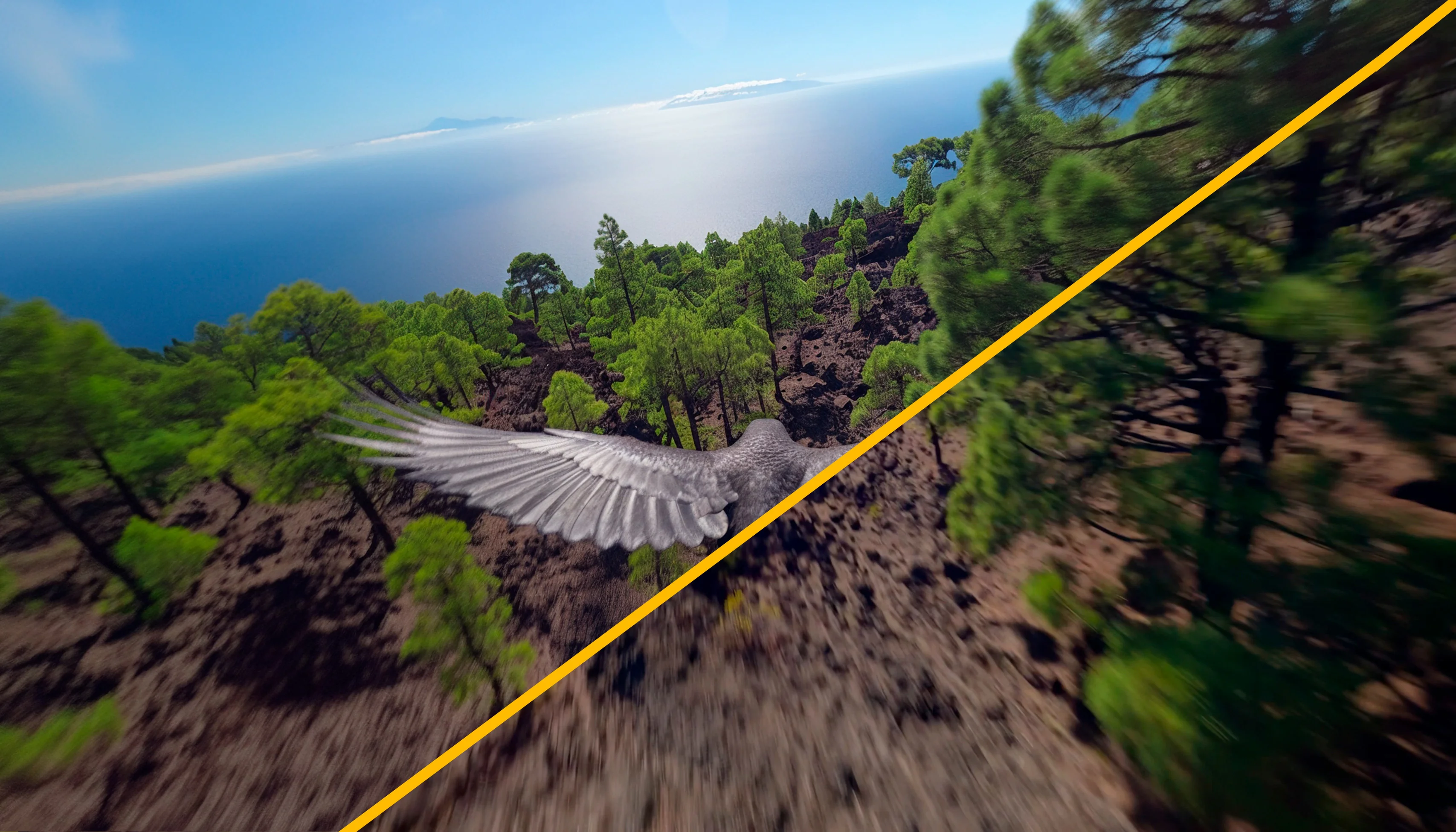
Drag the divider. On the left, what came out of the camera. On the right, what came out of the VFX pipeline. Same movement, same light, same duration.
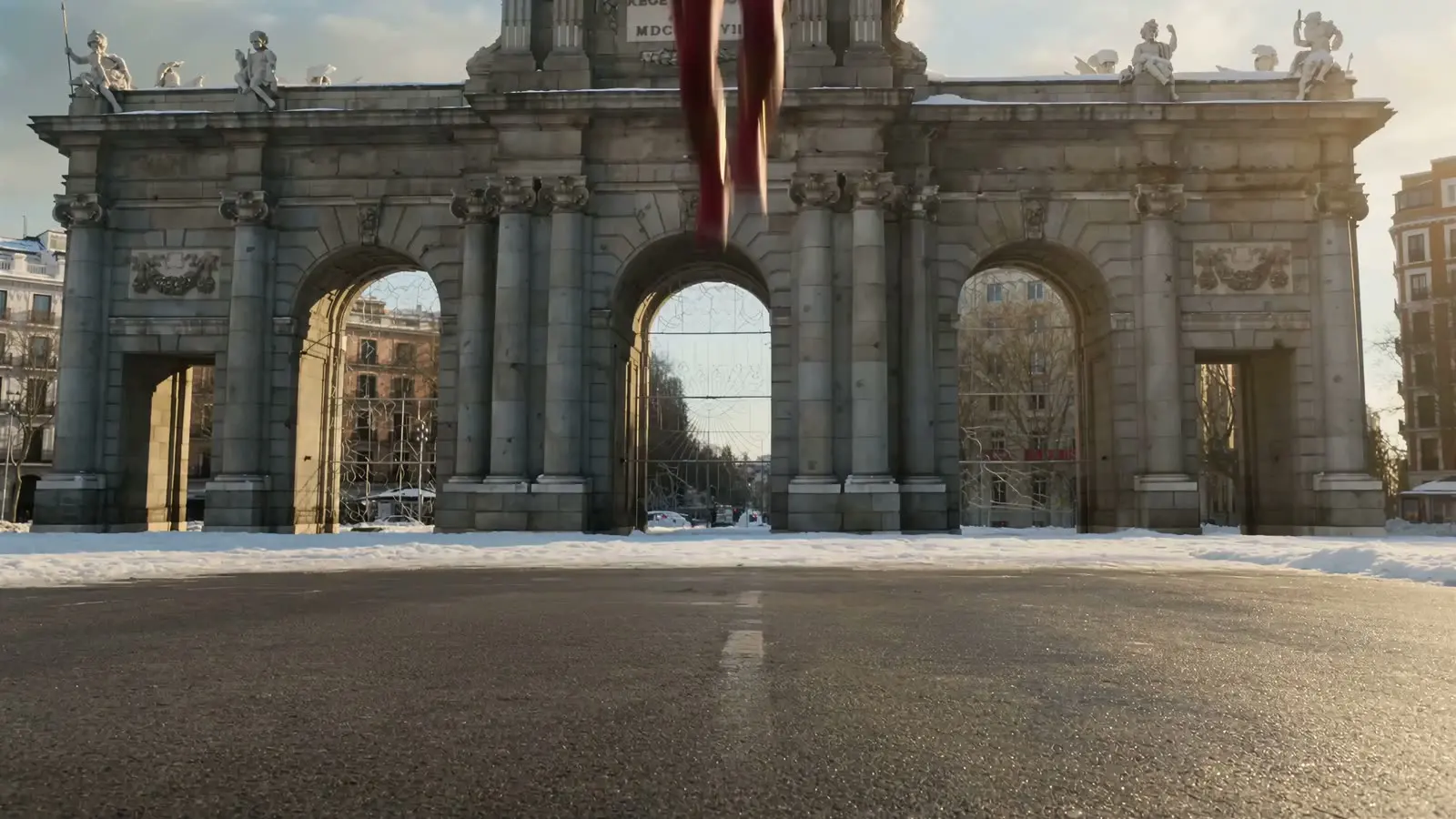
The same take of Puerta de Alcalá, resolved under six different conditions. The wipe reveals each treatment over the camera plate. None of these versions was filmed.
Camera plate · snow · storm · frozen dawn · spring · apocalypse · ruins
One shoot day yields six deliverables. That is the difference between waiting for the weather and deciding the weather in post-production.
Nine kinds of work that cover most of the visual effects briefs a studio receives. If your shot does not fit any of them, tell us anyway.
The set ran out two metres past the frame. We extend the environment, replace the background or build the city that does not exist behind the actors.
Animals, fantasy beings or digital doubles that inherit the movement of what was filmed, with their weight, their shadow and their contact with the ground.
A street from today turned into the 1940s: façades, signage, vehicles and costume. Historical reconstruction without closing the street or renting props.
Snow, rain, fog, smoke, dust or a golden hour that never happened on the shoot day. Season and sky changed on the existing shot.
Replacing the clothing, the uniform, the vehicle or the product in a shot already filmed. Useful for versioning a campaign per market without calling the crew back.
Removing rigs, tracks, floor marks, signage, third-party logos, passers-by and vehicles that wandered in. The good take stops being unusable.
Filling a stadium, a square or a beach from a small group of extras. Blockbuster scale with a small shoot's call sheet.
Explosions, collapses, fire and impacts where filming is off the table for cost, permits or safety. No special effects crew on set.
Historical photographs brought to life, damaged footage upscaled and stabilised, and reconstruction of events only documents remain of.
Independent features, series and short films with shots written into the script that the budget will not carry. We work shot by shot on your edit, with the naming convention and the formats your post-production uses.
Set extension · creatures · cleanup · crowds
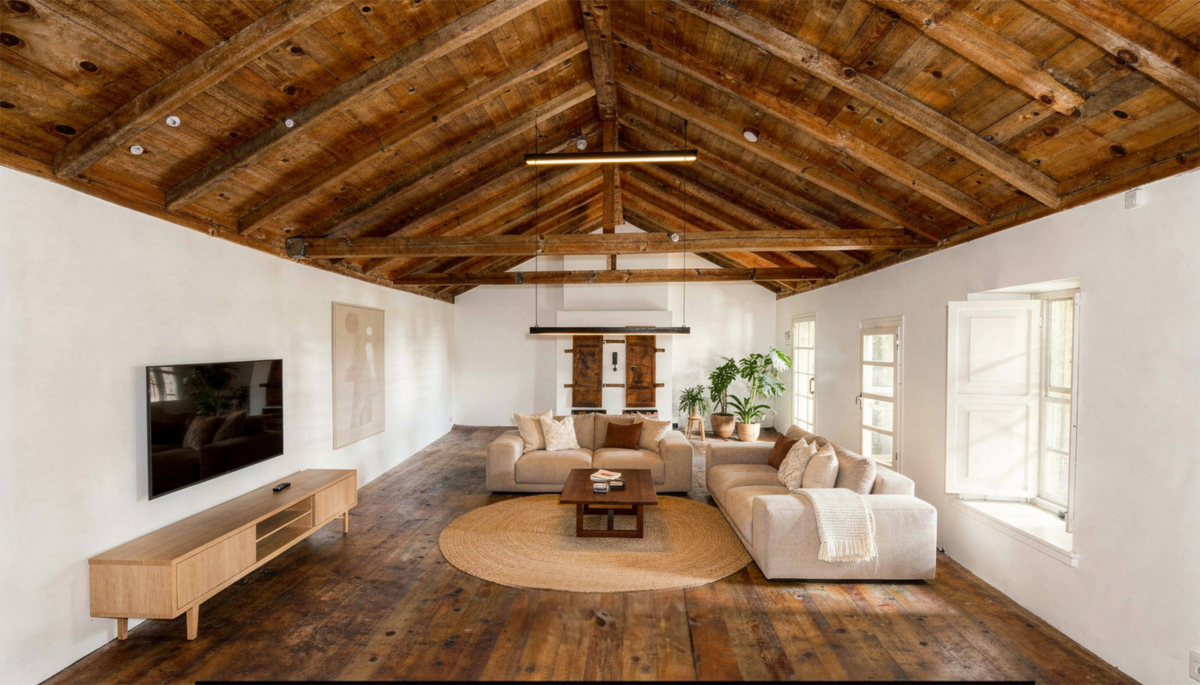
Spots and campaigns where the product, the market or the season has to change on a shoot that is already paid for. We come in as your agency's VFX studio, under NDA, and we stay out of sight of the end client if you prefer it that way.
Versioning · product · period change · retouching
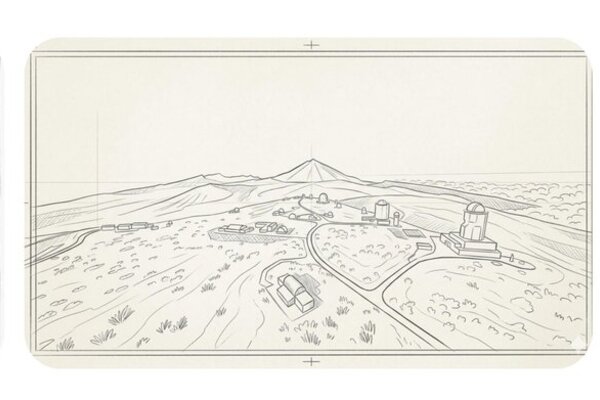
Brand pieces that need an image no single shoot day can deliver: a factory that does not exist yet, a product that is still a render, a location nobody can travel to.
Branded content · launches · social
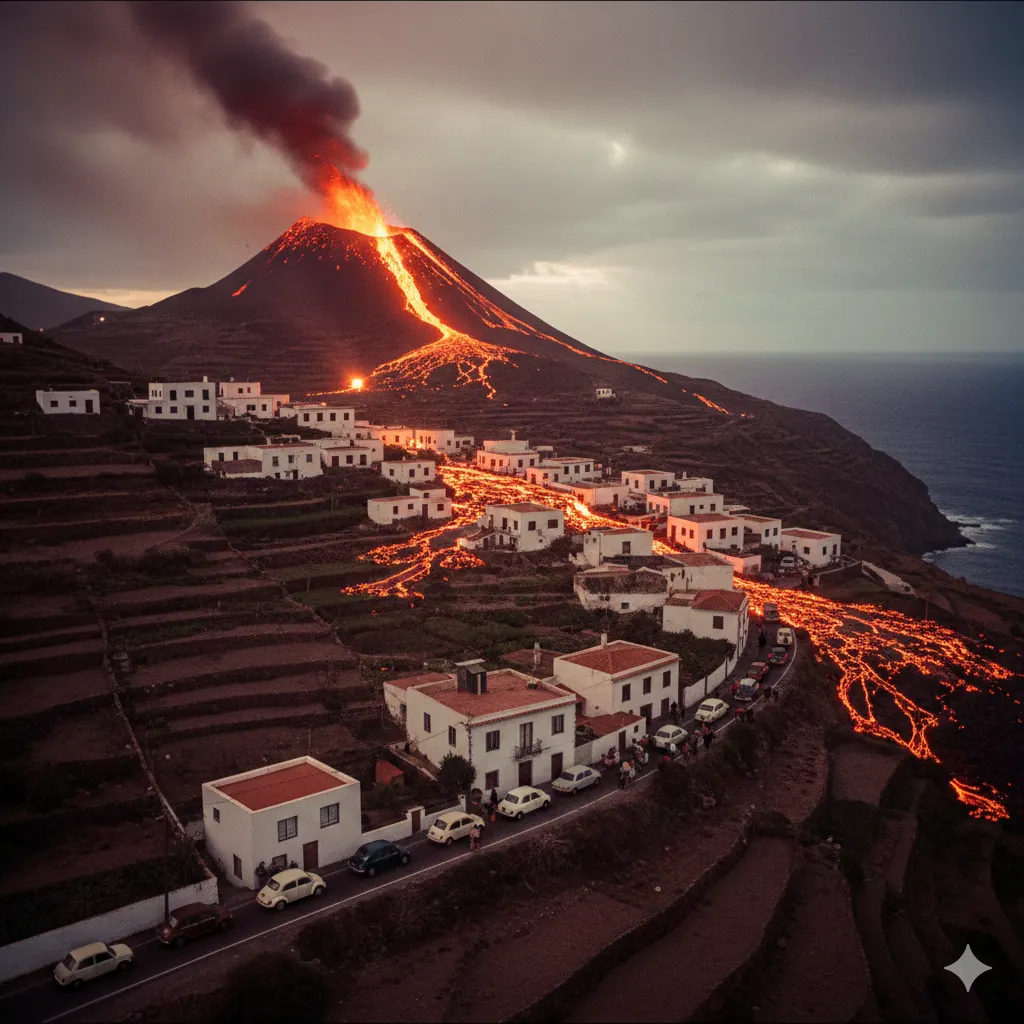
Museums, local governments, foundations and broadcasters that want to show a place that is gone or an event only one photograph survives of. With documentary rigour and the sources credited in the piece.
Historical reconstruction · archive · outreach
The right route depends on continuity, physical contact, source-footage quality, and the required approval level. We compare both approaches to decide where generation contributes and where a traditional or hybrid pipeline is more appropriate.
| Aspect | Traditional VFX | AI VFX |
|---|---|---|
| Technical test | Scope depends on modelling, tracking, and compositing | Scope and schedule follow the shot breakdown |
| Quote per shot | Based on departments, artist hours, and complexity | Based on viable generation, compositing, and manual review |
| Impact of an iteration | Depends on the layers and artist work that must be rebuilt | Depends on the changed layer, continuity, and approval stage |
| Team required | Compositing, 3D, tracking and matte departments | VFX direction plus a generative pipeline |
| Frame-by-frame control | Total | High, with supervision and manual correction on critical shots |
| Where traditional still wins | Long shots with complex physical contact and strict character continuity | We take those on as hybrids: generative base with manual compositing on top |
| Delivery resolution | According to the pipeline and master | According to the footage, integration and master |
We do not sell AI as a replacement for a VFX department. We use it where it shortens the road and we keep the manual work where it is still needed. A quote from us says which part goes each way.
We watch your edit or read your script and mark, shot by shot, which ones carry an effect, of what kind and at what difficulty. The result is a breakdown with the cost and the schedule of each one, so you can decide which ones make the cut.
When a project requires it, we propose a test on a representative or high-risk shot. Scope, approval criteria, schedule, and cost are confirmed before production; if filming has not started, we can include a shooting guide.
The elements are generated and integrated into the footage with camera tracking, keying, lighting adjustment and grain. Supervision is manual: whatever the model gets wrong is corrected by hand.
A unified grade so the real and the generated read as one shot. Delivery in your post-production's formats, plus a rights, sources, versions and transparency-decisions record as our voluntary production standard.
Each finished shot, graded to match the rest of the piece and named the way your edit needs. MP4 (H.264 or H.265), MOV ProRes and image sequence if your post-production asks for it.
The generated elements delivered separately with alpha, mattes and compositing passes. If tomorrow you want to version the shot or hand it to another studio, you have the material.
If you have not filmed yet, the document with framing, light and camera movement that makes integration easy. In every case we add a rights, sources and versions record, check available marking and prepare any disclosure that applies or is chosen voluntarily.
Tell us about the project and we will review the footage, script, or shot breakdown before recommending the next step.
+34 674 786 386 · studio@eficiencial.com · Santa Cruz de Tenerife
They are VFX in which some elements that could not be filmed are generated with AI models and then integrated into live-action footage using camera tracking, keying, light, colour, and grain matching. Method suitability and integration level are assessed shot by shot against the project’s visual language and approval criteria.
We quote from a shot-by-shot breakdown covering duration, complexity, continuity, source-footage quality, resolution, deliverables, and manual review. Any test scope and schedule are agreed before production. Send the footage or script to studio@eficiencial.com so we can assess a generative, traditional, or hybrid route.
Integration is assessed shot by shot. We match light, grain, edges, movement, and colour through manual compositing, but the result depends on the footage, complexity, and approval criteria. We identify limitations and the recommended route during breakdown or an agreed test.
Yes. We can work as an external VFX team for a production company or agency, adapt to its shot nomenclature, and agree confidentiality, white-label operation, formats, and approvers in the proposal and contract.
Set extension and matte painting, creatures and digital characters, period changes, weather and season changes, replacement of costume, props or product, plate cleanup and element removal, crowds, action and destruction, and reconstruction of historical events from archive. Where it is still hard is very long shots with complex physical contact and strict continuity of one face: those we take on as hybrids, with manual compositing on top.
If footage already exists, we assess its limits first. If filming has not started, we can include guidance on framing, camera movement, markers, and lighting to reduce integration risk; its scope and timing are agreed for the project.
Resolution and formats are agreed from the source footage and required master. We can work with deliveries up to 4K, ProRes, H.264/H.265, alpha image sequences, or DCP when the pipeline supports them; colour profile, masters, and included outputs are specified in the proposal.
Ownership and licensing depend on source assets, providers, and intended use. The proposal and contract specify media, territories, duration, and applicable terms; we document sources and providers, while the client must hold permissions for supplied people, brands, and locations.
Not every AI-generated VFX shot requires a visible label. Article 50 depends on role, content and exhibition context; backgrounds, set extensions and VFX need a contextual assessment. On every delivery we assess applicability, preserve available technical marking and document rights, sources and versions. This is technical preparation, not legal advice or a compliance guarantee. See our reviewed AI advertising guide.
Yes, it is one of our lines. With Fuencaliente Town Council we recreated the 1971 eruption of the Teneguía volcano, combining real archive with generated sequences, in Teneguía 1971: the eruption recovered. It works just as well for a museum, a local government, a foundation or a broadcaster that wants to show something only photographs remain of.
Yes. VFX work is remote by nature: you upload the footage, we send back the shots. We work in Spanish, English and German, and we already have clients in Spain and in German-speaking countries. The shoot itself does need a crew on location, but that is your production's side.