Cannes Lions 2026: the lesson for brands buying AI
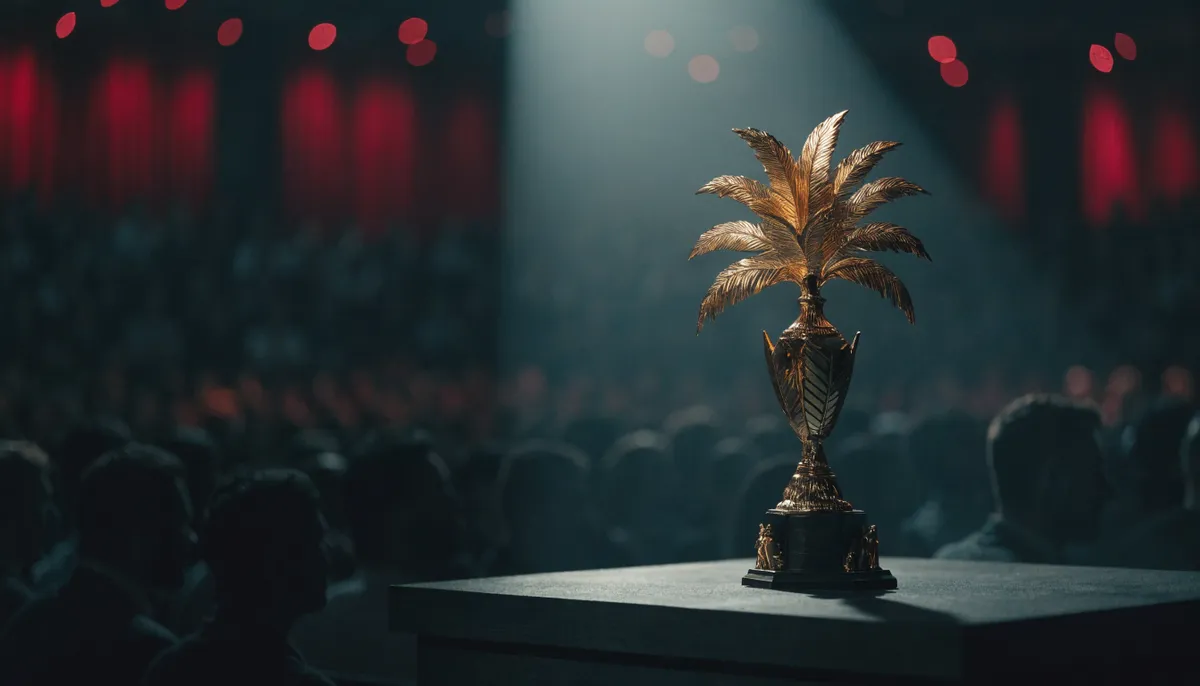
The world's most important creativity festival just sent an uncomfortable message to half the industry: AI didn't win Cannes. An idea did. And if your brand is about to commission an AI spot this year, that distinction is worth money.
What happened at Cannes (and why it matters even if you weren't there)
Cannes Lions 2026 ran from June 22 to 26, and the Grand Prix for Film, the festival's oldest and most respected category, went to Anthropic's campaign "Ads Are Coming To AI. But Not To Claude": two spots created by the agency Mother London and directed by Jeff Low. Traditional production, with real craft, that pokes fun at the flood of AI-generated ads. The jury described it as work that "reordered perceptions in the most consequential tech race of our era."
The festival itself drew a line in the sand with its new global integrity standards. Simon Cook presented the framework as a way to reinforce accountability and trust in entries.
In its opening announcement, Cannes Lions reported 20,050 entries from 92 countries and linked the new rules to a more focused approach to submissions. The practical reading is greater accountability for each piece. Even Arthur Sadoun, CEO of Publicis, premiered a satirical short poking fun at the overblown AI promises in agency pitches.
The paradox: meanwhile, AI is already producing in prime time
It would be a mistake to read Cannes as a rejection of AI. The very same weeks brought signs of the opposite:
- A World Cup spot made 95% with AI. The Spanish-American team MITO produced a 120-second piece for prime time featuring recognizable players from Spain's national team in impossible scenes, cutting months of production down to a fraction.
- A Spanish agency at the NBA Draft. SpecialGuestX brought its real-time generative AI system to Brooklyn's Barclays Center in front of 4.2 million viewers: attendees were transformed live within the broadcast.
- Funding confirms competition, not an outcome. On 3 July, SCMP reported, citing a Hong Kong stock-exchange filing, that Kling AI was seeking around $3 billion. On 6 July, Axios reported that $2.8 billion had been raised. Those are figures published by the two sources on different dates; by themselves they do not prove that models will become cheaper or better.
- Google and A24 begin a research partnership. Google DeepMind confirmed the collaboration and an investment in A24, but its announcement did not disclose the amount and says specific outputs and milestones will evolve with the project.
- A market estimate, not an accomplished fact. A Research and Markets report published in March 2026 estimates the global AI-in-advertising market at $14.12 billion for 2026 and forecasts $36.34 billion for 2030. It is a projection subject to methodology and adoption, not a guaranteed outcome.
The honest conclusion isn't "AI, yes" or "AI, no." It's that the market already distinguishes between two different products that happen to share a name.
What the market rewards, and what it punishes
| Wins in 2026 | Loses in 2026 |
|---|---|
| An idea with craft, executed with whatever tool fits (AI included) | The tech demo dressed up as a campaign |
| Consistent art direction: the brand is recognizable in every frame | "AI slop": generic pieces that could belong to anyone |
| AI built into the production pipeline, invisible to the viewer | AI as the headline and the only value proposition |
| Documented rights, traceability, and source material | Content of dubious origin nobody can explain to a jury or a regulator |
What to demand from whoever produces your next AI campaign
If you're weighing up commissioning an AI spot or campaign, Cannes 2026 just wrote you the brief:
- The idea needs a named owner. Ask who signs off on the creative direction and what criteria they apply before a single frame gets generated. If the answer is a list of tools, that's a bad sign.
- Demonstrable brand consistency. Ask to see how they keep characters, product, and aesthetics consistent across frames. Master asset systems exist for exactly this; loose prompts don't.
- Rights traceability. Ask for music, voices, likenesses of real people and source material to be documented for the intended use. The Google-A24 partnership shows that tools and workflows continue to evolve; the contract should define sources, licences, permissions and channel restrictions.
- A model-agnostic pipeline. Reports of Kling's funding suggest the tool landscape could shift again, but they do not guarantee cost or quality. Your partner should choose the appropriate model for each shot, not sell you their own.
The bar went up; the budget didn't
The useful reading for buyers is that human-directed AI production can now enter broadcast work, but quality level, schedule and savings depend on the brief, shot-by-shot review and which line items it genuinely replaces. What separates a spot that works from generic output is not the software: it is who directs.
At EficiencIAl Studio we produce AI advertising spots within our AI video production service, with creative direction and traceability. The proposal defines scope, schedule, deliverables, revisions and applicable rights or licences after the brief is reviewed. If your brand wants to assess this approach, tell us about the project.