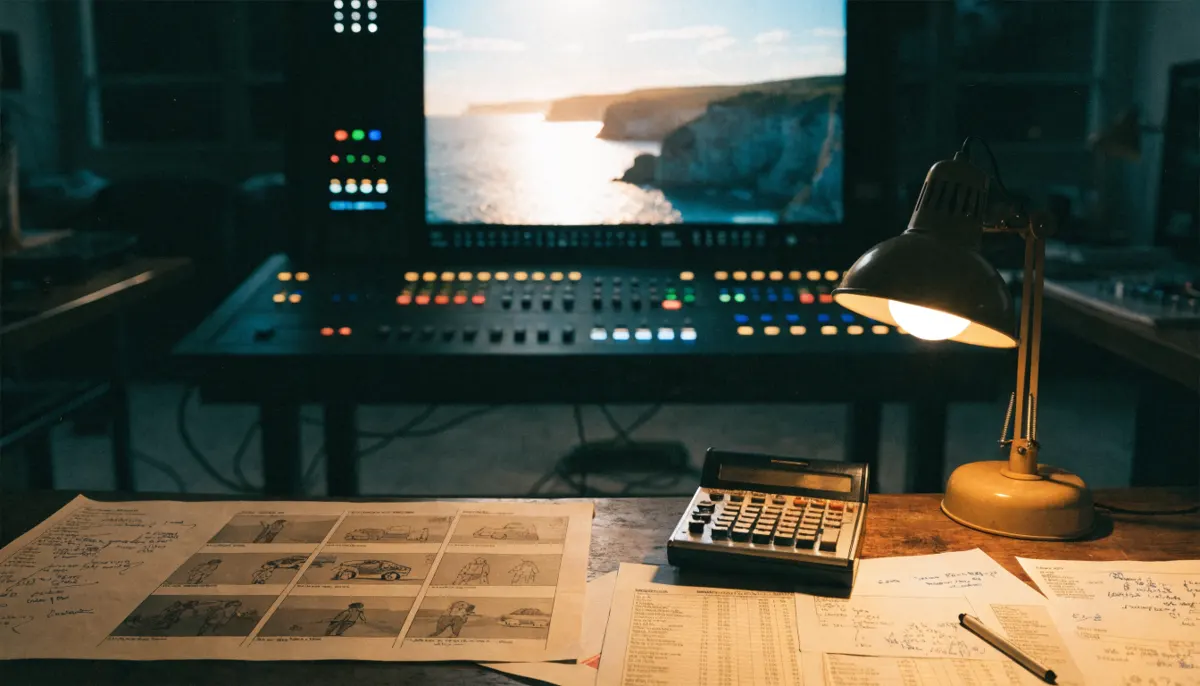
AI video yourself or hire a production company
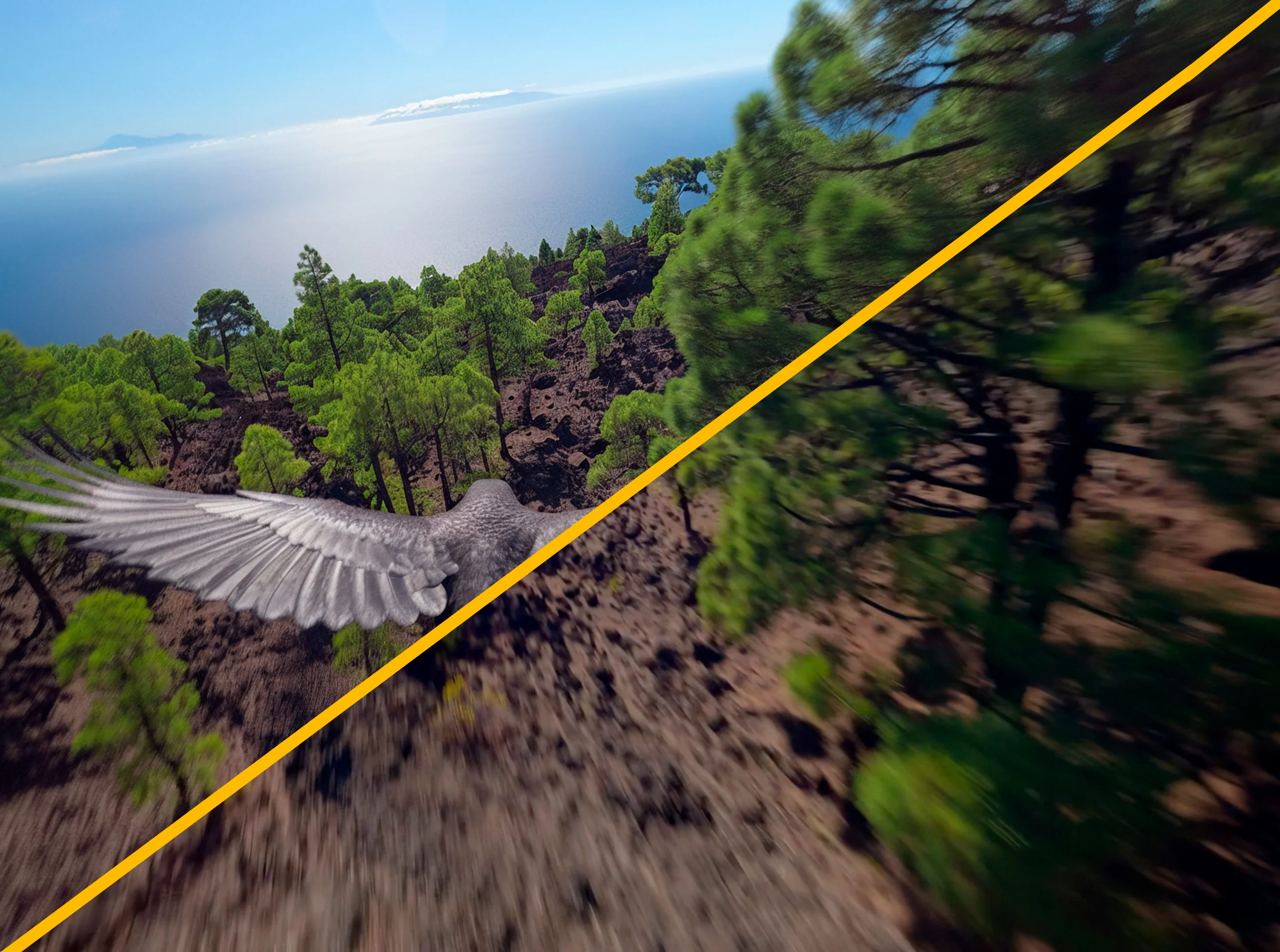
A self-service tool such as Sora, Veo or Runway can handle a rough cut, quick idea or low-risk internal clip. Publishing a campaign also requires brand control, continuity, review, documented rights and the agreed formats. Here is the line between self-service and directed production.
We often hear from teams that have already tried a self-service tool. They open Sora, type a prompt, watch four seconds of apparent magic, then try to make the second shot with the same character. That is usually where the call begins. The tool is not at fault: their problem had stopped being generate a video and had turned into publish a campaign. Those are two different crafts.
This piece draws that line without hype. You will see what a video generation app genuinely solves and the criteria that reveal its limits for a specific commercial use. If your project fits the first group, we just saved you a meeting. If it lands in the second, you will know why and what to expect from a production company.
What a self-service tool does well
Let us be fair to the technology, because it is remarkable. Tools such as Sora, Veo and Runway have turned into a matter of minutes what three years ago required a shoot or a motion team. For several uses they are the right answer and you need nobody else:
- Sketching an idea. Showing a client or your manager how a shot would feel before spending a euro on production. A living animatic convinces more than ten pages of script.
- Low-risk internal clips. A video for a Slack channel, a team message, a concept for a meeting. Things that never carry your logo into paid media.
- Exploring visual direction. Testing ten looks in an afternoon to decide where to go. As a production company, we use these tools for exactly that, in the exploration phase.
- Ephemeral, high-volume content. Feed filler where the brand is not risking its reputation and the shelf life is measured in hours.
If your need is one of these, stop reading and open an account. Seriously. Paying a production company for this would be like hiring an architect to hang a picture.
Where the real ceiling is
The problem does not show up in the first shot. It shows up in the second, and above all in delivery. These are the five walls everyone hits when trying to take a standalone tool all the way to a publishable piece.
1. Character continuity across shots
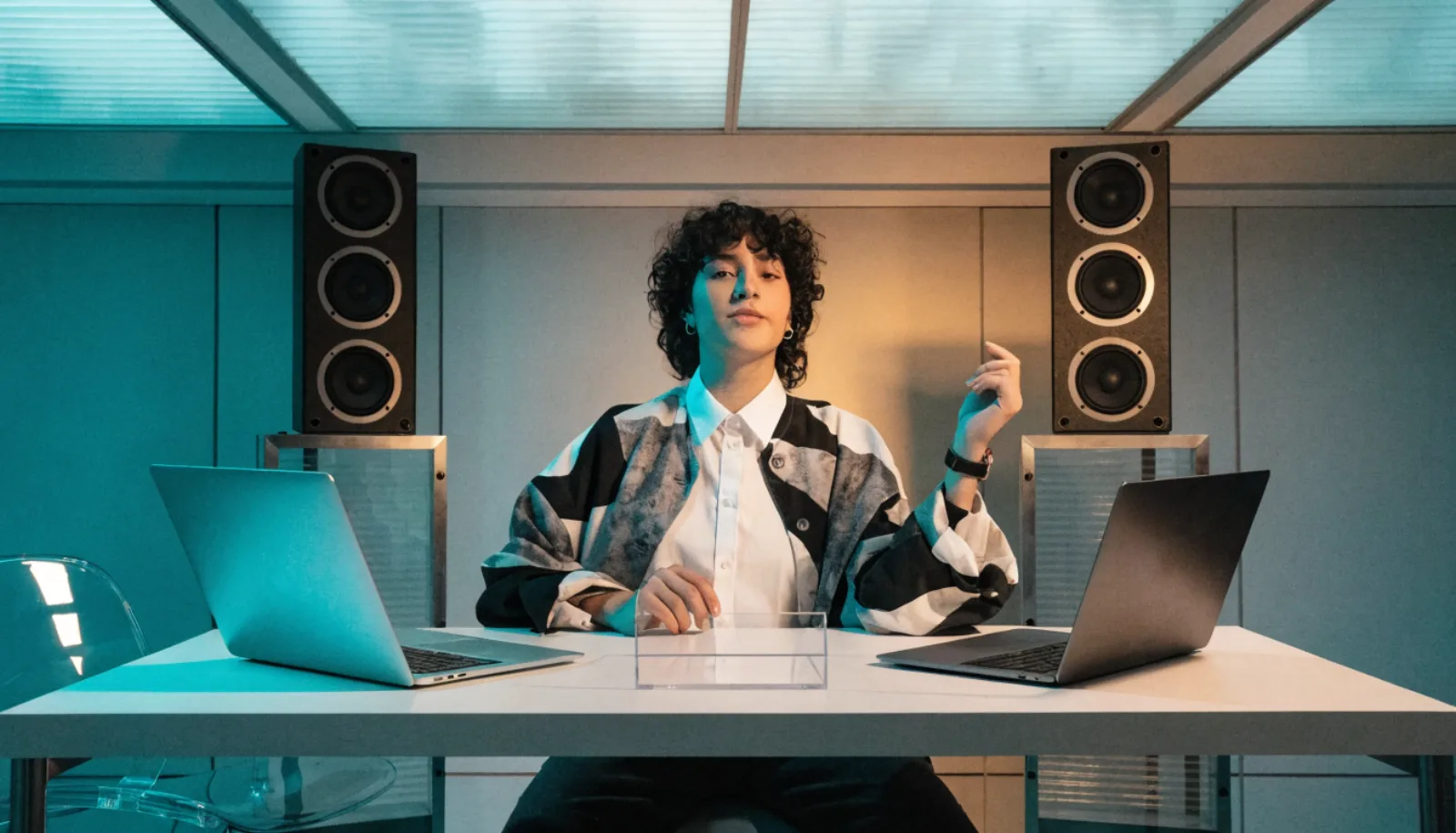
An ad is built from twelve shots, not one. And the same character has to look identical in all of them: same face, same clothes, same age, same hair. Character drift (the person subtly changing from cut to cut) is the number one failure of self-service today. It can be fixed, but it requires locked references, a consistency pipeline and a director eye shot by shot. It does not come out of a prompt.
2. The tells: hands, text and logos
Six-fingered hands, an unreadable caption, a logo that warps for half a second. These are the three errors that make a video scream AI-generated on first watch. In an internal clip they do not matter. In a paid spot they wreck the brand credibility. Cleaning them up is post work, not generation.
3. Brand control
Your exact corporate colour, your typography, your real product packaging with the correct label. A tool generates something that resembles your brand; a production reproduces your brand. That difference is the one your client sees and the one your marketing team has to defend to leadership.
4. Commercial usage rights
Before spending media budget on an ad, someone must be able to answer who may use each element, where, for how long and under which licence. Platform terms change and vary by plan. A production company should document in the proposal and contract the rights and licences that correspond to scope; full transfer is not assumed by default.
5. Turnkey final delivery
A campaign may require a multi-format package: for example 16:9, 9:16 or 1:1 versions, different durations, subtitles, sound mix or a specific master. The proposal defines which are delivered; adapting framing and rhythm is production work, not an automatic export.
 First attemptWith direction
AI tool versus production company, criterion by criterion
Deciding honestly starts from a different question: which one fits what is at stake. This table sums up the line:
| Criterion | AI tool (self-service) | AI-native production company |
|---|---|---|
| Brand control | Approximate: colour and logo lookalike | Based on approved brand references and criteria |
| Continuity across shots | Fragile: character drift is common | Managed with references, tolerances and review |
| Commercial usage rights | Variable by plan and platform | Licences, uses, territories and channels defined by contract |
| Directed iteration | User trial and error | Review rounds with a director eye |
| Multi-format final delivery | Loose clips you have to edit | Package of formats and masters agreed in the proposal |
| Cost and timeline | Very low, instant | Budget and schedule after the brief is reviewed |
The cited figure is what an external production company publishes for a traditionally shot 15-to-30-second spot. It is an editorial market reference, not our rate or a turnaround promise. Texel, 2026
When AI is not the best option (and we say so)
This is where a serious production company separates itself from a brochure. There are projects where AI is not the right tool, and hiding that would be selling smoke:
- Real, recognisable faces. If your CEO, an ambassador or a specific client has to appear as themselves, you shoot. AI imitates generic people very well; it does not replace an identifiable person without permissions, risk and a result that almost always shows.
- Documentary and live. A real event, a genuine testimonial, an unscripted reaction. That is captured, not generated.
- Product claims with legal weight. Sectors where what appears on screen has regulatory implications (food, health, finance) call for real capture or a very controlled treatment.
Saying this wins us work rather than costing it. The client who knows you will flag when AI is wrong is the one who comes back for the ten pieces where it is right.
The essentials
- Self-service (Sora, Veo, Runway) for sketches, ideas and low-risk internal clips. It is the starting point, not the final result.
- The ceiling appears in continuity across shots, brand control, rights and multi-format delivery.
- An AI-native production company should quote after reviewing the brief; price and schedule depend on scope rather than a universal band.
- If you need real recognisable faces or live footage, AI is not the route. An honest production company tells you before starting.
How to know which side you are on
Ask yourself three questions. Does the piece carry your brand into paid media or to a client? Does it need agreed continuity for the character or your product across several shots? Will someone ask you for rights or formats to publish? If you answer yes to even one, you have already crossed the self-service line. Your talent is not in question; the craft of production simply begins.
At EficiencIAl Studio we are an AI-native production company: we use these engines inside a directed pipeline rather than selling the engine as the product. The proposal defines scope, quality criteria, schedule, formats, reviews and rights in writing. We provide remote services from Spain to brands and agencies on a project basis through our AI video production and AI VFX services, depending on the brief.
If you tried a tool and your project outgrew it, you have not failed; you have simply reached the point where production begins. Tell us what you want to publish and we will tell you frankly whether AI is the route and what to expect.
Tell us about your projectFrequently asked questions
Can I make a professional ad on my own with Sora or Veo?
For a publishable ad carrying your brand, not reliably. Sora and Veo generate excellent shots in isolation, but an ad demands character continuity across takes, brand criteria, commercial usage rights and the agreed formats. That is production work, not a prompt. For sketches, ideas and internal clips, they are enough.
What is the difference between Sora, Veo and Runway for a brand?
For a brand, the difference that matters lies elsewhere: using any of those engines standalone or inside a directed pipeline. Each excels at different things (realism, motion, control), and a production company picks the right one per shot. The value comes from the direction that governs the tool, not from the tool itself.
Who owns the rights to an AI-made video?
It depends on the platform and the plan, and their terms change, which is why you should lock it by contract before investing in media. A production company delivers the material with commercial usage rights defined in writing, something self-service accounts do not always guarantee for paid advertising or assignment to third parties.
How much does an AI video by a production company cost versus doing it myself?
Doing it yourself with an app costs the subscription and your time. Texel’s cited 3,000-to-8,000 EUR figure for a short spot is an editorial third-party reference, not our rate. Directed production quotes brand control, rights, continuity and deliverables after the brief is reviewed.
When should I NOT use AI for my video?
When you need a real, recognisable face (your CEO, an ambassador), when it is documentary or live, or when the product claim has strict legal requirements. In those cases you shoot. An honest production company tells you before starting rather than forcing the tool.
See it: one shot, played back as you scroll
This is a real AI-rendered sequence, directed frame by frame. There is no embedded video: the frames advance with your scroll, like a product page. Move the page and see for yourself.

One asset. Reviewed control criteria.
Every frame, graded to the brand.
If your piece no longer fits in an app, let us talk. Review our approach to corporate video production with AI for B2B companies, see our projects or send the brief; after review, you will receive a written proposal defining scope, price, schedule, rights, revisions and deliverables.